
Poles, Wires, and $50 Million Decisions: Why the ‘Big Iron’ Strategy is Failing Industrial NZ
This is Part 2 of our series. Read [Part 1: The $3 Billion Opportunity] here.
In our previous article, we explored the "Evidence"—the landmark 2026 EECA and Jacobs report which revealed that Demand-Side Flexibility (DSF) represents a staggering $3 billion opportunity for New Zealand. But while the report provides the "investment-grade" theory, the boardroom and the factory floor are currently grappling with a much more expensive reality.
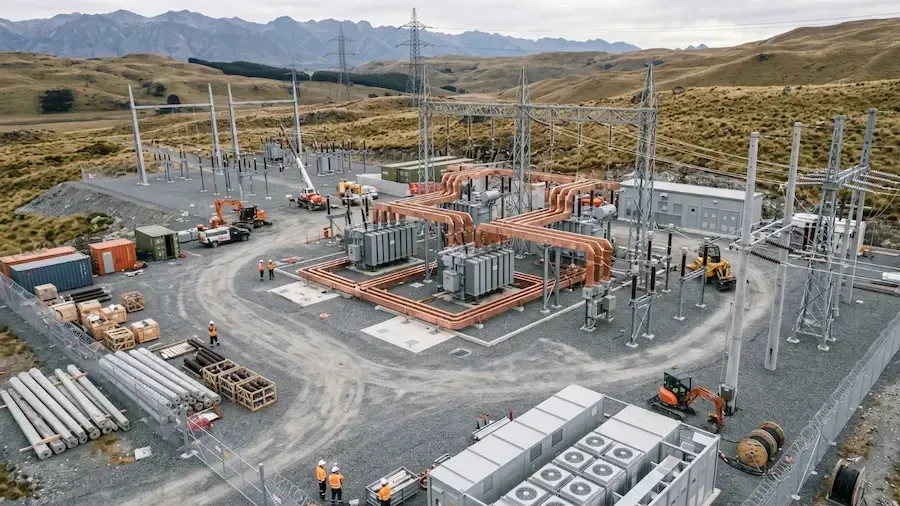
Right now, across New Zealand, massive financial decisions are being made about our energy infrastructure. These decisions involve "Big Iron"—the poles, wires, and Grid Exit Point (GXP) upgrades that have traditionally been the only tool in the shed for managing growth.
At DETA, we believe the conversation needs to change. Because in "Real Life," you can buy—or arbitrage—a lot of batteries, diesel generators, or other demand response for the cost of a few kilometres of copper and a $50 million substation upgrade.
The $50 Million Question: Why the GXP Strategy is Strained
If you look at the public notices from our nation’s Electricity Distribution Businesses (EDBs), you will see a recurring theme: capacity upgrades.
- Numerous EDBs are looking at spending upwards of 50million on GXP upgrades
- Significant infrastructure projects are underway or planned for the Upper Clutha, Ruakura, and Piako.
The reasons for these investments are always linked to growth—new subdivisions, the electrification of process heat, or the expansion of industrial parks. Traditionally, the logic is simple: if the bucket is full, you buy a bigger bucket.
However, the 2026 EECA report highlights that Transpower estimates a $1.5 billion reduction in system costs for every gigawatt (GW) of peak demand reduction. When an EDB spends $50 million on a GXP upgrade to handle a peak that only occurs for 40 hours a year, that cost doesn't disappear into the ether. It is baked into line charges and passed directly to the industrial and commercial consumers for the next 30 years.
We are building "cathedrals" to handle the Sunday morning rush, while the pews sit empty for the rest of the week.
Flattening the Duck: Industrial Edition
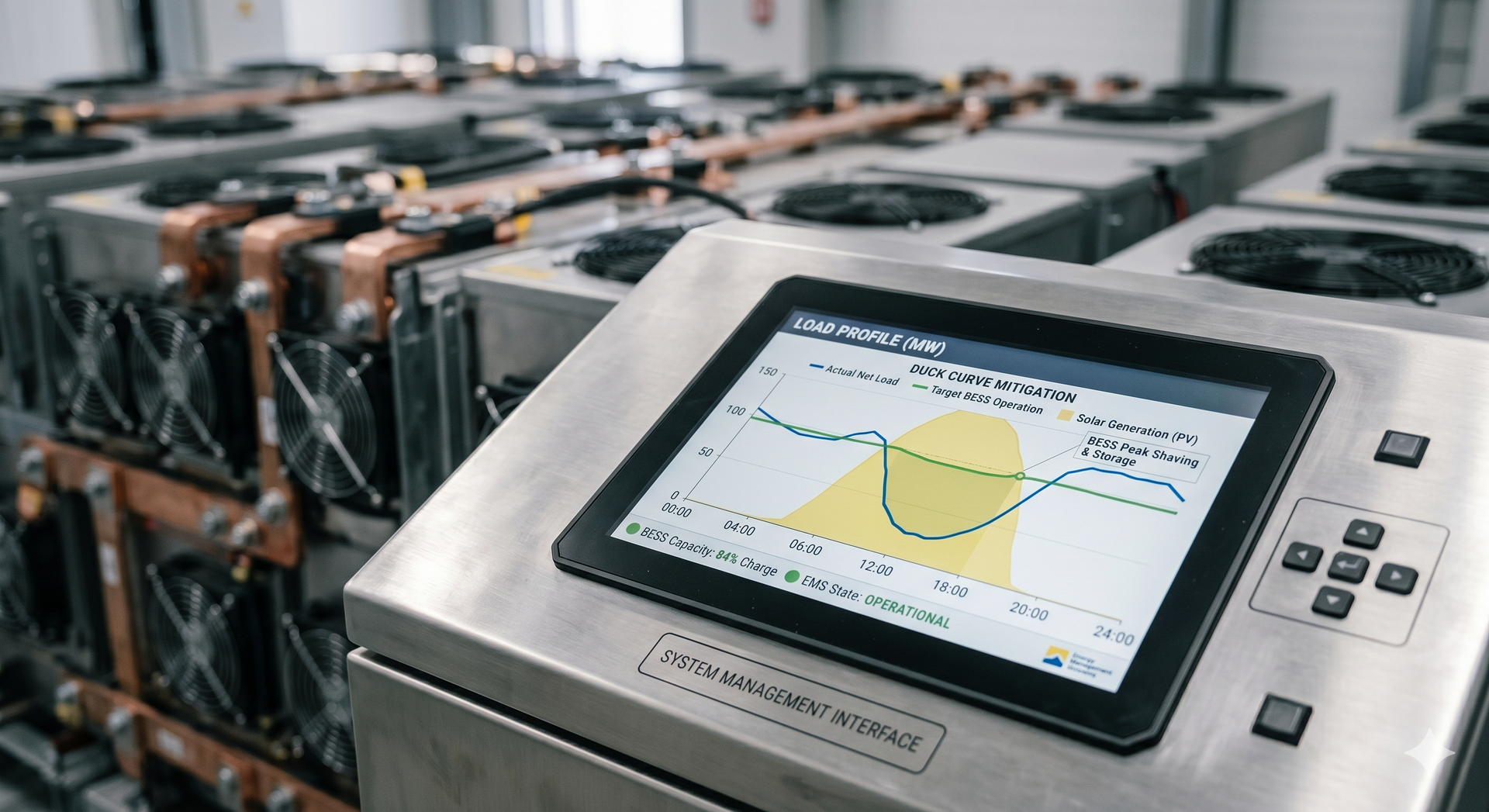
In the energy sector, we often talk about "The Duck Curve"—a graph of power demand that drops during the day (due to solar generation) and fat-ends in the evening. In New Zealand, we aren't just trying to "feed the duck"; we are trying to flatten it.
For an industrial site, your load profile is your signature. If your peak demand coincides with the national or regional peak, you are the "reason" the EDB is looking at that $50 million upgrade.
The report analysis demonstrates that implementing DSF at scale—moving load from peaks to troughs—could compress the country's electricity load by up to 1,900 MW. This isn't just about saving the grid; it’s about Infrastructure Deferral.
If a group of industrial players in a region like Piako or Waitaki can collectively shift 10 MW of load, they can potentially delay a $50 million capital project by a decade. In the world of Net Present Value (NPV), that delay is worth millions.
The Arbitrage Play: Batteries vs. Copper
One of the most provocative takeaways from the Jacobs research is the cost-benefit of technology over hardware. The study notes that the biggest benefit of DSF is the avoided investment in generation and network infrastructure.
Consider the trade-off. A $50 million investment in "Big Iron" (poles and wires) is static. It does one thing: it carries current. It has no intelligence, it offers no arbitrage, and it provides zero revenue to the end-user.
Now, consider a distributed approach:
- Storable Loads: Industrial-scale batteries, diesel generation, load shedding, or thermal storage systems.
- Intelligent Controls: Smart Energy Management Systems (EMS) that automate load shifting.
As the report suggests, while the cost of these technologies might currently seem "relatively high," they provide a multipurpose return. They allow a business to:
- Avoid the "Peak Tax": Stepping away from the grid when prices exceed $400/MWh.
- Generate Revenue: Providing "Interruptible Load" or frequency keeping services to the grid.
- Ensure Resilience: Providing back-up power during outages—something a standard pole and wire cannot do.
In "Real Life," the business case for a battery often beats the long-term line-charge impact of a GXP upgrade, provided the engineering is "Investment-Grade."
The "Production First" Bottleneck
Despite the logic, there is a reason Piako and Waitaki are still looking at copper. The 2026 report surveys revealed a massive behavioral barrier.
- 71% of industrial respondents stated their operations must continue regardless of energy prices.
- The "Production First" mentality means that any energy strategy perceived as "disruptive" is dead on arrival.
At DETA, we see this as an engineering challenge, not a philosophical one. The report acknowledges that for many industries, maintaining production is a rational business decision, not a lack of education.
However, "Real Life" DSF isn't about asking a dairy factory to stop drying milk when the wind stops blowing. It’s about finding the "Hidden Flex" in non-critical systems or using storage to "bridge" the peak.
Bridging the Gap: Why DETA is in the Room
The GXP upgrades in Ruakura and Upper Clutha are being planned right now based on forecasted load. If those forecasts don't account for the potential of DSF, we are over-capitalising our country's balance sheet.
The Jacobs study suggests that to realise the $3 billion potential, we need a "two-way street" where policy makers learn from industrial participants. We need to bridge the gap between the EDB’s requirement for a stable grid and the Plant Manager’s requirement for 100% uptime.
As engineers, our role is to move beyond the desktop modeling and onto the factory floor. We help businesses identify if they are part of the "peak problem" and, more importantly, how they can become part of the "flexibility solution."
Looking Ahead to Part 3
The report has given us the evidence. Real life has given us the $50 million infrastructure dilemma. So, how do we actually operationalise this?
In the final part of our series, "Operationalising the Report," we will look at the specific alternatives to these massive hardware investments. We’ll discuss:
- Diesel Load Flex: The scale and impact of commercial load management.
- V2G (Vehicle-to-Grid): The future of the industrial fleet.
- Fuel Flex: The critical role of switching between electricity, gas, and coal to manage the grid’s "dry year" risk.
The era of solving energy problems with just "Big Iron" is ending. The era of the Intelligent Grid has begun.
Is your operation being throttled by grid constraints?
👉 Read the final installment — [Part 3: Operationalising the Report & Three Practical Paths to Grid Independence]
What we do