CapEx vs OpEx: How to Fund Your Decarbonisation Projects in 2026
You have the roadmap. You understand the 2030 targets. You know exactly which heat pumps, VSDs, or boiler upgrades are required to cut your site’s carbon emissions and improve efficiency.
But when you slide the engineering proposal across the desk to the C-suite, the conversation hits a wall.
"Great idea," the CFO says. "But we don’t have the CapEx budget for this right now."
In the economic climate of 2026, capital constraints are the single biggest barrier to industrial efficiency improvements. With inflation impacting input costs and market volatility tightening purse strings, securing large Capital Expenditure (CapEx) approvals for "green" projects is difficult.
But "no budget" does not have to mean "no progress."
The most successful industrial operators in New Zealand and Australia are flipping the script. They aren't asking for new money; they are funding their future competitiveness by mining the inefficiencies of the present. They are leveraging third-party finance, government co-funding, and creative OpEx models to get steel in the ground.
Here is how to fund your decarbonisation projects in 2026—without breaking the bank.
The "Hidden Budget" in Your OpEx
To understand how to fund these projects, we first need to reframe how we look at energy costs.
Every month, your accounts team pays utility bills—electricity, gas, coal, water, trade waste. In accounting terms, this is Operational Expenditure (OpEx). It is often treated as a "fixed cost of doing business." It is rarely scrutinised with the same intensity as a new capital project.
However, if your site is running inefficiently, a significant percentage of that monthly bill is essentially waste. You are paying for energy that doesn't end up in the product—it goes up the stack, out the drain, or radiates off uninsulated pipes.
The Strategy: The OpEx-to-CapEx Pivot
The smartest way to fund a decarbonisation project is to propose a project that reduces that OpEx waste and uses the savings to pay for the equipment.
For example, installing a Variable Speed Drive (VSD) on a large industrial fan might cost $20,000 upfront but save $1,500 a month in electricity. The pitch to finance isn't "We want to spend $20k." The pitch is: "We are investing 13 months of our electricity budget to permanently lower our operating costs."
When you frame energy efficieny as "margin protection" rather than "sustainability," you are speaking the CFO’s language.

Energy Performance Contracts (EPCs): Sustainability that Pays for Itself
If internal capital is truly frozen, or if you want to keep debt off the balance sheet, an Energy Performance Contract (EPC) is a game-changer. This model is becoming increasingly popular in Australia and is gaining traction in New Zealand for medium-to-large industrial sites.
How an EPC Works An external partner (typically an Energy Service Company or a specialised green financier) pays for the equipment upgrade. They cover the design, procurement, and installation costs of your new high-efficiency technology—whether that’s a new refrigeration plant, a biomass boiler, or a site-wide LED and control upgrade.
You do not pay for the equipment upfront. Instead, you pay the provider a portion of the guaranteed savings generated by the new system for a set period.
The Financial Logic:
- Zero Upfront Capital: You get the benefits of modern technology immediately without touching your CapEx allocation.
- Performance Guarantee: The provider takes the technical risk. If the system doesn't deliver the efficiency savings they promised, you don't pay the full amount. This de-risks the project significantly for your board.
- Cashflow Positive: In many structured deals, the monthly savings are higher than the monthly repayments. This means your business is cashflow positive from Day 1.
At DETA, we help clients model these projects to determine if an EPC is the right route, bridging the gap between engineering feasibility and financial viability.
Leveraging Government Co-Funding in 2026
Both the New Zealand and Australian governments understand that the upfront cost barrier is high. To accelerate the transition to low-carbon industry, substantial funds have been allocated for 2026 to "de-risk" these investments.
If you are planning a project, you may be eligible for cash rebates that significantly improve your ROI.
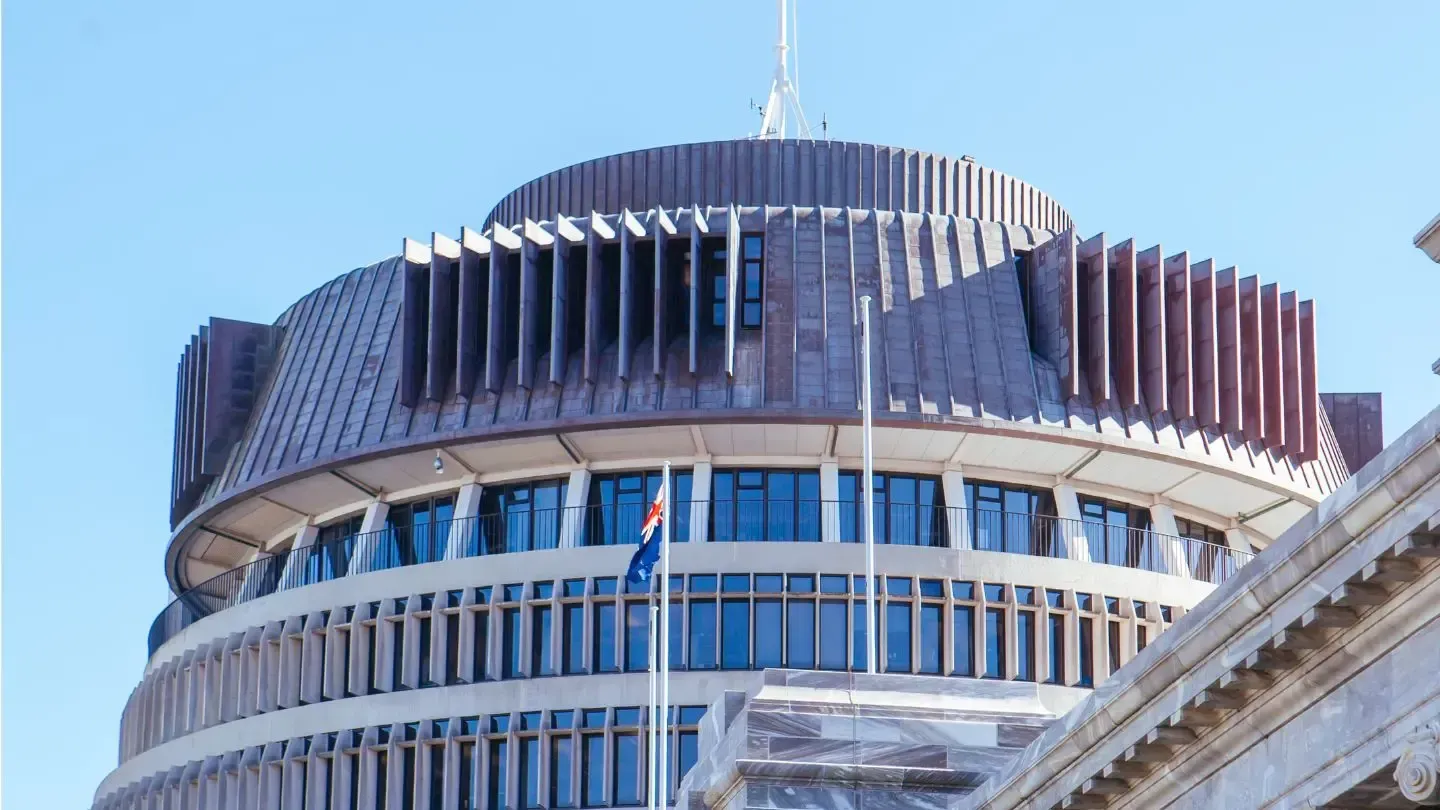
In New Zealand: EECA and the GIDI Evolution
The Energy Efficiency and Conservation Authority (EECA) continues to be the primary support mechanism for NZ industry.
- Technology Demonstration: If you are looking to implement a technology that is proven overseas but under-utilised in New Zealand (such as high-temperature heat pumps in specific processing applications), you may be eligible for higher funding tiers to "demonstrate" viability to the local market.
- Feasibility and Engineering Support: One of the biggest hurdles is getting the accurate numbers required for a business case. EECA funding is often available to cover up to 40% of the cost of an energy audit or feasibility study. This allows you to engage experts (like DETA) to build the investment case with minimal risk.
In Australia: ARENA and State-Based Grants
The funding landscape in Australia is more fragmented, operating at both Federal and State levels. However, the available capital is significant for those who know where to look.
- ARENA (Australian Renewable Energy Agency): The Industrial Transformation Stream is a key target for large energy users. With hundreds of millions allocated, this stream supports feasibility studies and engineering for deep decarbonisation, particularly in hard-to-abate sectors.
- Victorian Energy Upgrades (VEU): For Victorian businesses, the VEU program offers tangible rebates for upgrading inefficient equipment like motors, refrigeration systems, and lighting. These create "Victorian Energy Efficiency Certificates" (VEECs) which can be sold to offset project costs.
- NSW Energy Savings Scheme (ESS): Similar to Victoria, NSW offers financial incentives for projects that reduce electricity or gas consumption.
- Queensland Manufacturing Energy Efficiency Grants (MEEG): These grants (often up to $50k matched funding) are specifically designed to help manufacturers reduce energy use and carbon emissions.
Note: Grant windows open and close rapidly with generally high demand. It pays to have a "shovel-ready" project (with a completed feasibility study) sitting on the shelf so you can apply the moment a funding round opens.
Phased Implementation: The "Snowball" Strategy
You do not need to decarbonise your entire plant in one financial year. In fact, attempting to do so often leads to "analysis paralysis."
We often advise clients to adopt a "Snowball" funding strategy.
Step 1: The Low-Hanging Fruit (OpEx)
Start with low-cost, high-return optimisation projects. Fix compressed air leaks, insulate steam valves, tune boiler control loops, or install variable speed drives.
These projects often have a payback period of under 12 months.
Step 2: Ring-fence the Savings
This is the critical step. Do not let the savings from Step 1 disappear back into the general ledger. Create a dedicated "Efficiency Fund" where the money saved on utility bills is deposited.
Step 3: Fund the Major Upgrades (CapEx)
Use the accumulated cash from Step 2 to fund the deposit or finance costs for a larger project, like a heat recovery system or a heat pump retrofit.
This approach builds trust with internal stakeholders. Once the Operations Manager and CFO see the first pilot project delivering real, verifiable cash savings, signing off on the next, larger project becomes exponentially easier.
The Business Case: Beyond Just "Energy Savings"
Finally, when you are asking for money in 2026, ensure your business case captures the total value of the project.
Too many engineering proposals focus solely on the energy bill. But modern, efficient equipment delivers value across the P&L:
- Reduced Maintenance: New electric heat pumps have far fewer moving parts and compliance requirements than aging coal boilers.
- Increased Productivity: Optimising a process often leads to higher throughput (yield) or fewer bottlenecks.
- Carbon Liability Reduction: With carbon prices forecast to rise, reducing emissions is a direct hedge against future tax liabilities.
- Market Access: Sustainable manufacturing is increasingly a requirement for supply contracts with major retailers and export partners.
Don't Let "No Budget" Be the End
Decarbonisation isn't just about saving the planet; it's about protecting your bottom line.
Whether it is leveraging government co-funding to de-risk a pilot, using third-party finance to upgrade infrastructure off-balance-sheet, or simply reallocating your OpEx waste, there is almost always a way to fund a sound engineering project.
Need help building the business case?
DETA’s engineers don't just design systems; we model the financials. We can help you identify the best funding pathway, prepare the technical documentation for grant applications, and prove the ROI to your CFO, board, or owner
[Contact our team today to discuss your project funding options.]
What we do