
Operationalising the $3 Billion Opportunity: Three Practical Paths to Grid Independence for Industrial NZ
Editor's Note: This is the final installment of our three-part series on industrial energy flexibility. Catch up on [Part 1: The $3 Billion Opportunity] and [Part 2: Poles, Wires, and $50 Million Decisions].
In our first article, we analysed the "Evidence"—the landmark 2026 EECA and Jacobs report revealing that Demand-Side Flexibility (DSF) represents a massive 1,900 MW, $3 billion infrastructure opportunity for New Zealand. In our second article, we confronted "Real Life"—the staggering $50 million line-upgrade decisions currently being made by regional lines companies to manage peak loads using static "Big Iron" hardware.
The question is no longer whether demand-side flexibility is viable. The question for New Zealand’s industrial sector is: How do we actually operationalize it?
The EECA report makes it clear that the biggest barrier to deploying flexibility at scale isn’t a lack of executive education; it is the non-negotiable reality of "Production First." For 71% of industrial operations, throughput must be maintained regardless of electricity spot price spikes or regional grid constraints.
To bridge the gap between boardroom decarbonization goals and the reality of the factory floor, we must stop viewing demand response as a request to shut down operations. Instead, we must treat it as an active engineering discipline.
By deploying asset-backed alternatives to traditional grid consumption, industrial and commercial operators can insulate their margins from extreme volatility, bypass regional capacity limits, and turn their energy infrastructure into a dispatchable revenue generator. Here are the three practical, real-world pathways to operationalizing demand-side flexibility.
1. The Fast-Response Engine: Diesel Load Flex and Behind-the-Meter Generation
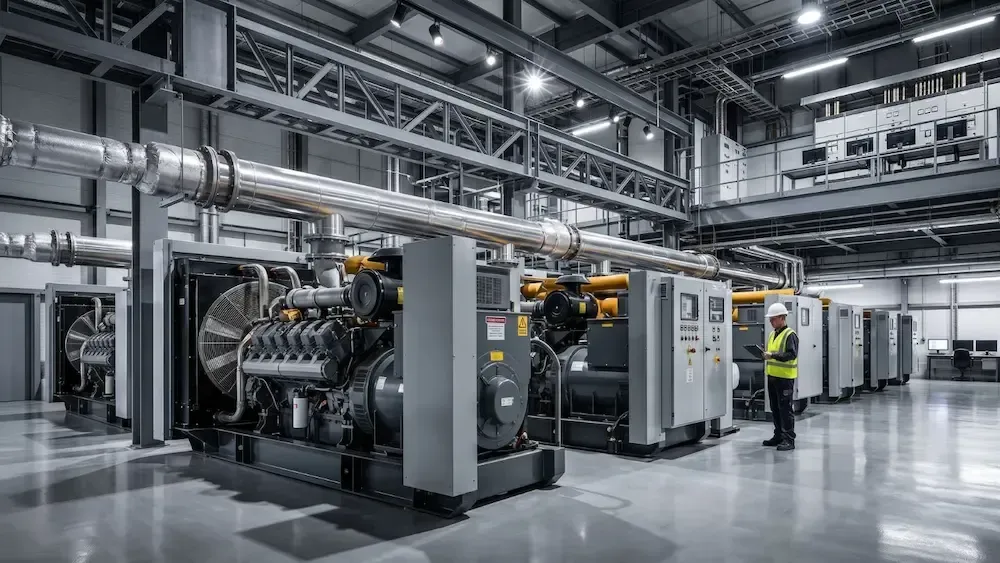
One of the most immediate, lowest-hanging fruits in the commercial and industrial landscape is the optimization of behind-the-meter standby generation. Across New Zealand's hospitals, data centers, cold storage facilities, and heavy processing plants, millions of dollars of industrial diesel generation capacity sit entirely idle, maintained solely for emergency backup scenarios.
The 2026 EECA report highlights a vital economic benchmark: the procurement price required to unlock the country’s core shiftable energy potential sits right at $500/MWh. This number is not arbitrary; it represents the approximate operating cost of a well-maintained industrial diesel generator running at scale.
When wholesale electricity spot prices exceed $500/MWh—or when a regional lines company enforces restrictive peak demand charges during winter transmission constraints—running behind-the-meter diesel generation changes from an emergency backup action to an active financial hedge.
The Scale of the Opportunity
Data from the Electricity Networks Association (ENA) highlights that the cumulative scale of distributed, behind-the-meter generation across New Zealand is substantial enough to significantly alter regional load profiles. By integrating intelligent control systems, an industrial facility can execute "Active Peak Lopping." Instead of drawing maximum current from the grid during high-tariff windows, the facility automatically fires its localized generation assets behind the meter. The plant’s net grid draw drops to near zero, yet the factory floor feels absolutely zero disruption. The production line continues to run at 100% capacity.
And though these assets are typically operated in ‘peak’ load, the vast majority of gensets are also rated in ‘prime’ load – where they can operate comfortably for weeks on end. For this opportunity though, we’re only talking about operating for a number of hours at a time, and most sites have diesel storage for at least 3 days of emergency operations should it be required.
Moving Beyond the Sunk Asset
From an investment perspective, this strategy shifts a diesel generator from a pure, depreciating insurance asset into an active capital optimization tool. By utilizing this latent capability to shed grid load during the highest 40 to 50 hours of grid peak intervals per year, large energy users can completely avoid the "Peak Tax," shield their operational budgets, and actively protect local network capacity without sacrificing a single unit of production throughput.
2. The Multi-Purpose Powerhouse: Large-Scale Batteries and Vehicle-to-Grid (V2G)
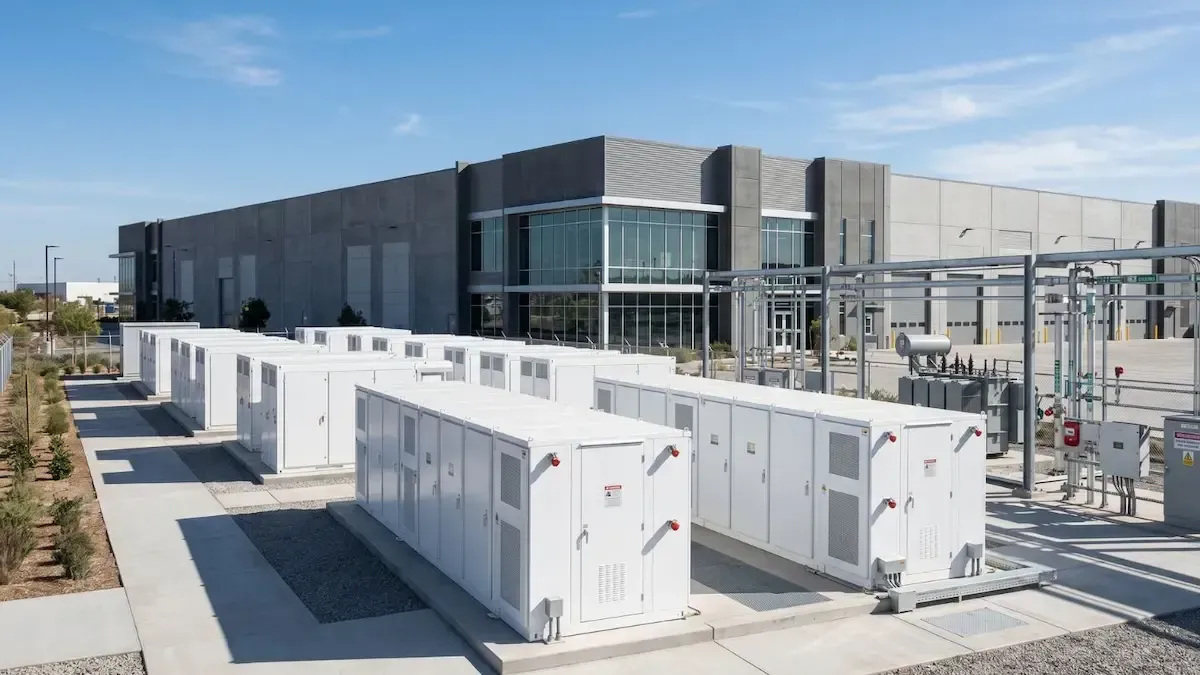
While behind-the-meter diesel provides a rapid, high-load response to extreme peak anomalies, the long-term future of industrial grid resilience belongs to electrochemical storage.
The Jacobs supply curve modeling identifies that the capital costs of battery energy storage systems (BESS) are projected to decline steadily through 2040. As these capital requirements drop, the "missing money" gap required to justify large-scale battery deployment narrows significantly, making the business case for distributed storage increasingly compelling against the long-term line-charge impact of a $50 million GXP upgrade.
Overcoming the Continuity Bottleneck
Batteries represent the ultimate engineering answer to the "Production First" constraint. Unlike mechanical load shedding, a battery storage system interfaces with an industrial footprint with absolute fluidity. It acts as a bidirectional shock absorber for the site's energy profile, balancing out the operational schedule across distinct market intervals:
- During Off-Peak Intervals: When grid prices are low (such as afternoon solar surges or overnight troughs), the automated system charges the onsite battery asset at highly favorable contractual rates.
- During Peak Intervals: When regional networks hit capacity constraints or market pricing spikes, the battery discharges directly into the facility's internal switchboard, yielding a 0% loss in production throughput.
The facility successfully compresses its load profile from the perspective of the lines company, bypassing regional infrastructure limits while its processing equipment operates without interruption.
3. The Ultimate Grid Release Valve: Industrial Fuel Flexibility
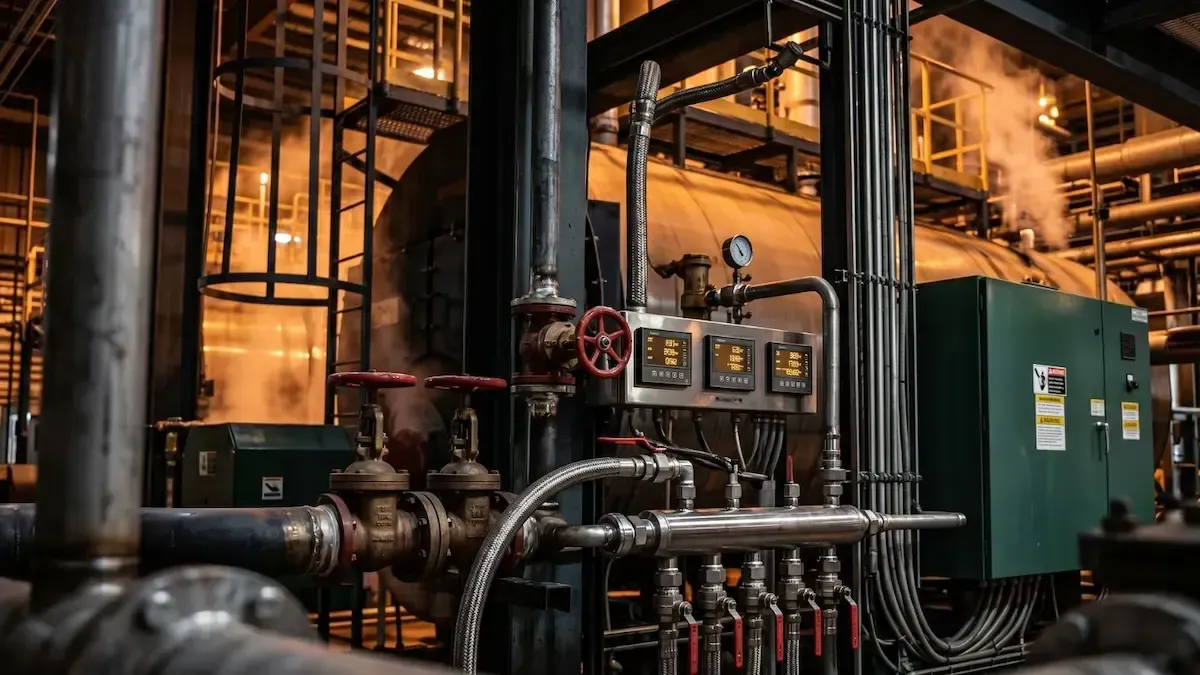
For heavy industrial processors—particularly those in the dairy, meat processing, wood product, and chemical manufacturing sectors—the absolute electrification of process heat represents an immense capital and operational hurdle. Transitioning a high-output steam system away from fossil fuels to high-temperature heat pumps or electrode boilers can put intense pressure on regional electricity networks, often triggering costly upgrade requirements.
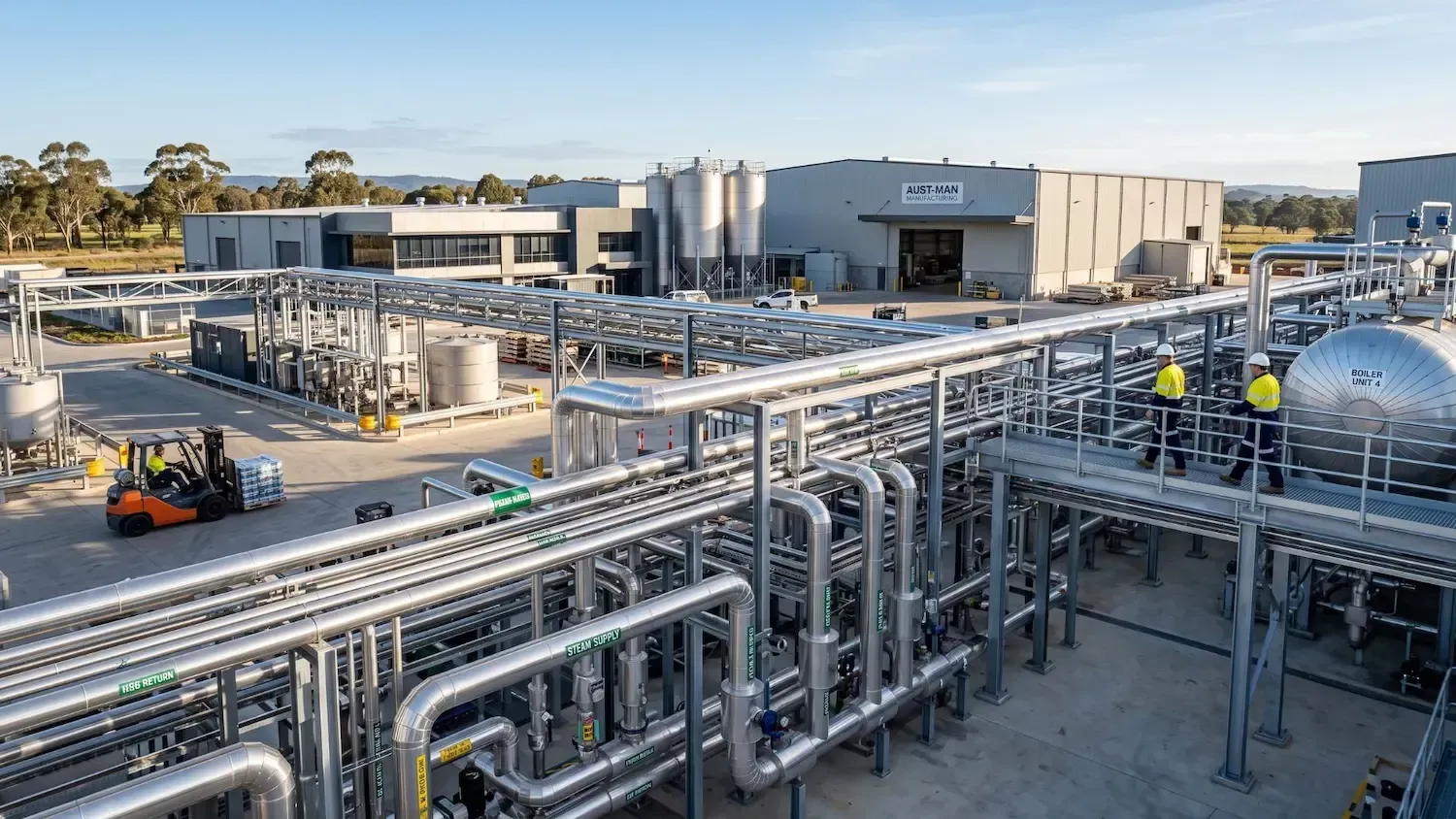
This is where Industrial Fuel Flexibility (Fuel Flex) acts as the ultimate grid release valve. Rather than viewing fuel switching as an all-or-nothing binary choice, elite energy engineering focuses on building dual-fuel or multi-fuel operational optionality into a site's infrastructure.
Managing the "Dry-Year" and Peak Capacity Risk
New Zealand’s electricity grid faces a structural vulnerability: dry-year hydro inflows paired with seasonal winter capacity constraints. If an industrial manufacturer relies entirely on a single electricity connection for 100% of its high-temperature process steam, it remains completely exposed to market pricing volatility and localized grid curtailment risks.
Industrial fuel flexibility involves engineering process heat systems that can dynamically toggle between energy vectors based on real-time economic and network signals:
- The Setup: A processing plant utilizes a high-efficiency electric boiler or industrial heat pump as its primary base-load heat source, capturing low-carbon, low-cost renewable energy during standard operations.
- The Flex: The facility maintains its existing gas, biomass, coal, or localized backup infrastructure alongside the electric plant.
- The Execution: When the national grid enters a critical supply constraint, or when local spot prices spike due to un-forecasted outages, the automated Energy Management System (EMS) shifts the high-temperature steam load away from electricity and over to the alternative fuel source.
The Scale of Impact
The scale of flexibility unlocked by industrial fuel flex is massive. Shifting a single high-output industrial boiler from electricity to an alternative fuel during a peak pricing event can instantaneously remove several megawatts of demand from a local network.
This multi-megawatt reduction provides the exact relief regional EDBs need to manage local grid constraints, effectively allowing the industrial participant to act as a virtual power plant. For the operator, it removes the financial risk of high spot exposure while ensuring that manufacturing throughput remains completely uninterrupted.
The Smart Grid is Built on the Factory Floor
The insights delivered by the 2026 EECA and Jacobs report outline a clear path forward for the country's energy landscape. We can no longer afford to solve our energy transition challenges by simply over-building static infrastructure. Building $50 million "cathedrals" of poles and wires to manage brief, seasonal peak intervals is an inefficient allocation of capital that increases long-term energy costs for every business in New Zealand.
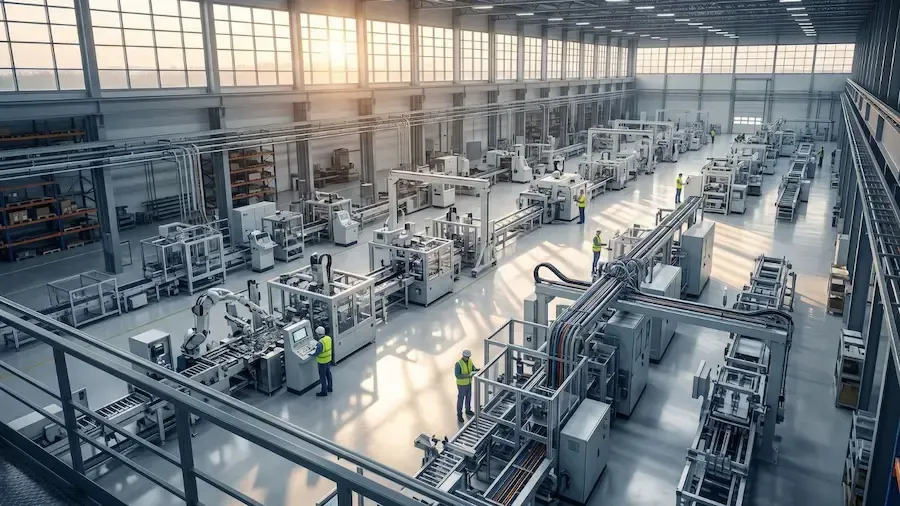
The real solution to our network capacity challenges will not be built on Transpower’s planning decks; it will be deployed directly on the factory floor.
Operationalizing demand-side flexibility is about recognizing the inherent commercial value of your facility's load profile. Whether through the automated deployment of behind-the-meter standby generation, the strategic arbitrage of large-scale battery systems, or the resilience of industrial fuel flexibility, smart energy management allows you to take total control of your energy footprint.
By shifting our focus away from static hardware and toward intelligent, asset-backed flexibility, we can unlock the multi-billion dollar potential of New Zealand’s energy system—ensuring our operations remain highly efficient, completely resilient, and commercially viable for the decades ahead.
Is your facility exposed to regional grid constraints or volatile peak electricity charges?
Contact DETA’s industrial engineering team today to conduct an Investment-Grade Demand Flexibility Audit alongside your energy strategy, and unlock your site's hidden energy value.
Missed an article? Read the full Demand-Side Flexibility Series:
- Part 1: [The $3 Billion Opportunity: Why Demand-Side Flexibility is the New Currency for Industrial NZ]
- Part 2: [Poles, Wires, and $50 Million Decisions: Why the ‘Big Iron’ Strategy is Failing Industrial NZ]
- Part 3: Operationalising the $3 Billion Opportunity: Three Practical Paths to Grid Independence for Industrial NZ
What we do