
First Operational GIDI Project: ANZCO Foods Heat Pump Integration
Replacing Coal with High-Temperature Heat Pumps at ANZCO Canterbury
Key Results at a Glance:
- First Operational GIDI Project: Historic milestone as the very first completed project under EECA’s Government Investment in Decarbonising Industry (GIDI) fund.
- 300% to 500% Efficiency Gains: High-temperature heat pump (HTHP) technology delivers 3 to 5 units of useful thermal energy for every unit of electricity consumed.
- Significant Coal Reduction: Replaced fossil fuel combustion with clean, low-carbon grid electricity at ANZCO’s largest processing site.
- Zero Production Downtime: Fully integrated into a live, brownfield meat processing plant during COVID-19 disruptions and severe winter weather.
The Operational Challenge
Phasing Out Coal on a Live Industrial Site
ANZCO Foods has partnered with DETA for over a decade in pursuit of a clear mission: to become the world’s most environmentally responsible red meat producer. A major target in this decarbonisation strategy was ANZCO’s largest processing site in Canterbury, where coal-fired boilers were traditionally used to generate high-volume process hot water.
Replacing coal with electric heat on a live, high-throughput meat plant presents complex engineering risks:
- High Thermal Requirements: Hot water is essential for continuous carcass processing, strict sterilisation, and daily plant washdowns.
- Grid Constraints: Transitioning from coal to electricity required a substantial increase in site electrical capacity.
- Brownfield Integration: New equipment had to be tied into existing refrigeration and hot water loops without disrupting daily slaughterhouse schedules.
The Engineering Solution
Reclaiming Waste Heat with High-Temperature Heat Pumps
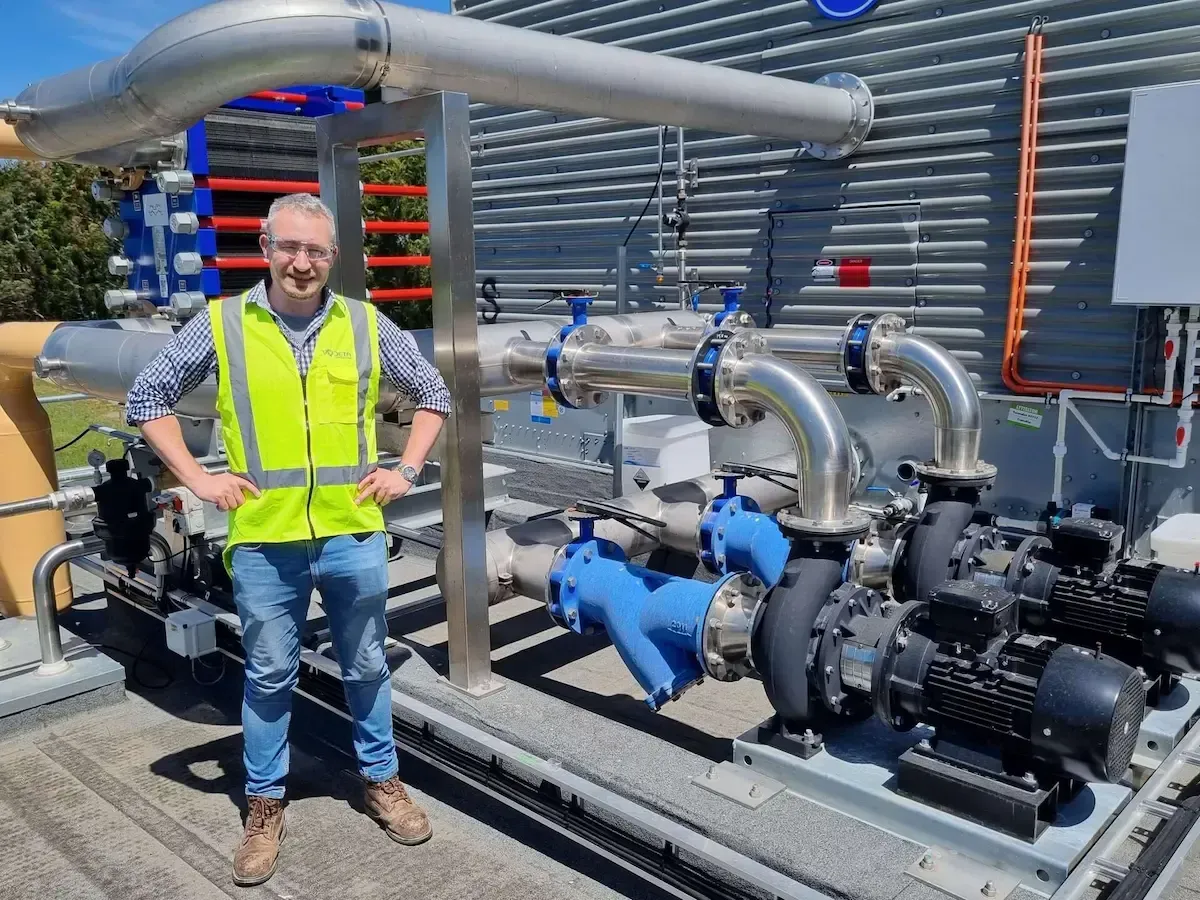
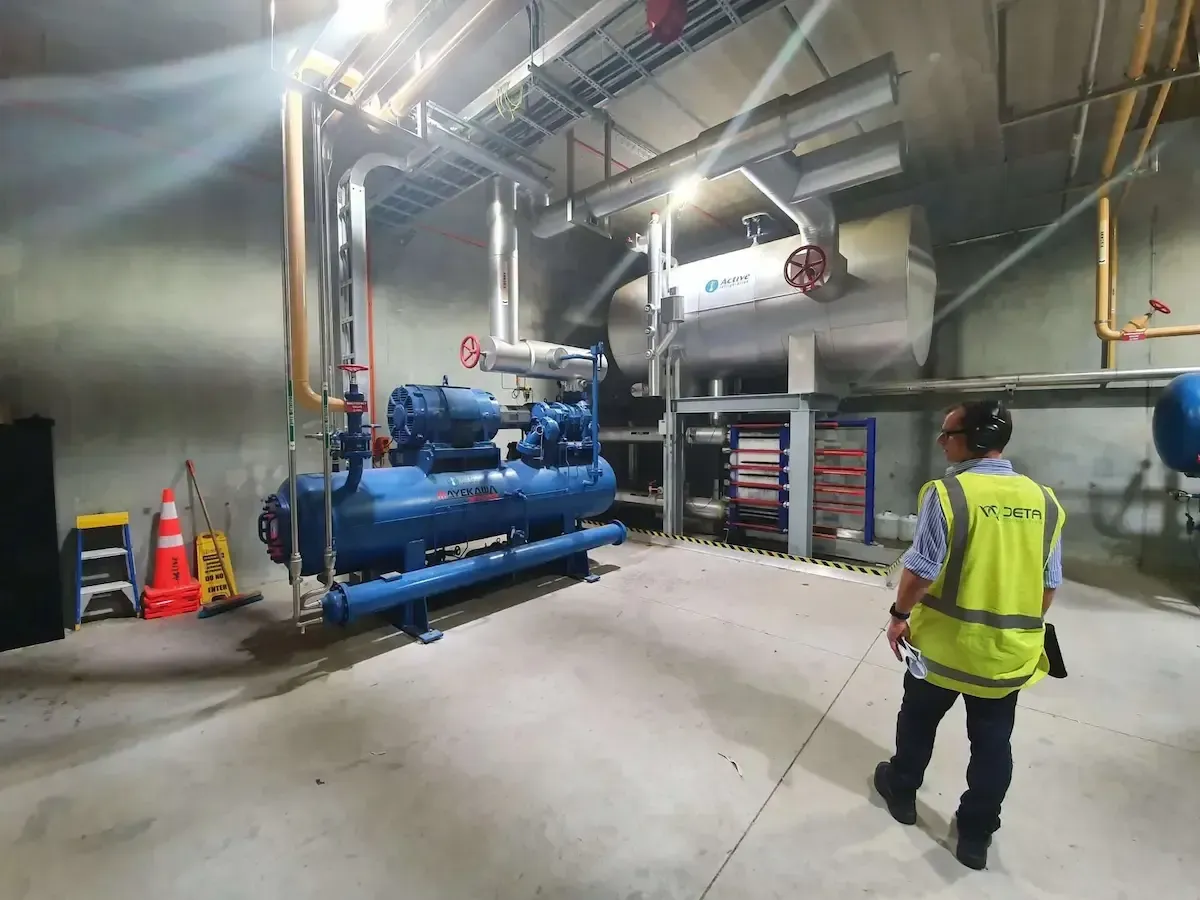
To solve this, DETA engineered a solution utilizing High-Temperature Heat Pump (HTHP) technology. HTHPs capture waste heat discharged by the plant’s existing ammonia refrigeration condensers and boost its temperature to supply process hot water across the site. Instead of burning coal, the facility leverages New Zealand’s low-carbon electricity grid to achieve efficiency gains between 300% and 500% (COP 3.0 to 5.0).
To make the business case bankable, DETA connected ANZCO with the Energy Efficiency and Conservation Authority’s (EECA) GIDI fund. Early in 2021, GIDI funding approval was successfully secured, making it the pioneer project for the national industrial decarbonisation initiative.
Full Scope of Project Delivery
DETA acted as the lead engineering project manager, taking the project from initial concept design through to final commissioning:
- EECA GIDI Grant Application: Developed the technical business case and carbon savings validation required to secure government co-funding.
- Electrical Supply Upgrade: Coordinated with Electricity Ashburton to install a new 1 MVA transformer, ensuring sufficient power capacity for the new HTHP plant.
- Civil Construction & Design: Designed and built a dedicated housing enclosure and completed site civil works to accommodate the new equipment footprint.
- Mechanical & Site Integration: Installed the HTHP unit and connected it to the site’s existing refrigeration discharge and water reticulation loops.
- Turnkey Project Management: Managed daily contractor operations, budgets, schedules, variations, and health and safety protocols.
- Commissioning & Handover: Executed full system commissioning, verified thermal performance, and established operational guidelines for site staff.
Overcoming COVID-19 Disruption and Weather Challenges
Executing a major infrastructure upgrade on a working industrial site always brings surprises, but this project faced extraordinary external pressures. The construction phase ran directly through 2021 COVID-19 disruptions alongside severe regional winter weather in Canterbury.
Through transparent communication and close collaboration with key contractors—including Active Refrigeration, Bradfords, SWARM Intelligence, Electricity Ashburton, and the Ashburton District Council—the combined team successfully navigated all site nuances, keeping the project on track to meet both ANZCO’s operational criteria and EECA’s funding milestones.
Measurable Results and Verified Carbon Savings
When commissioning was completed, ANZCO Canterbury officially became the first operational GIDI-supported project in New Zealand history—marking the functional start of the GIDI fund’s national carbon reduction journey.
- Permanent Emission Reductions: Verified continuous data measurements confirm a substantial, permanent drop in total site coal consumption.
- Proven Reliability: The system supplies reliable, high-temperature process heat without impacting product quality, production costs, or operational uptime.
- Group-Wide Rollout: The success of this installation established a proven engineering blueprint now being evaluated across other ANZCO facilities.
What the Project Partners Say
"This project was an example of how our business can lead the way in sustainability and decarbonisation. At ANZCO, building relationships is at the heart of our operation. Seeing the project team overcome challenges during delivery is a testament to how we can work collaboratively with our project managers and contractors to deliver real change."
— John Corcoran, Group Infrastructure and Asset Manager, ANZCO Foods
"We have a significant amount of experience at ANZCO’s Canterbury site within the DETA team and we used every ounce of this to ensure a successfully delivered project. I’m proud to say that we navigated through any issues in close partnership with ANZCO and our contractors toward a successful result."
— Jon Bruce, Senior Project Manager, DETA
Ready to De-Risk Your Industrial Heat Transition?
Whether you are looking to phase out coal, upgrade site electrical infrastructure, or secure government grant co-funding, DETA provides the independent engineering expertise needed to turn decarbonisation concepts into operational reality.
What we do